Success Troop
Tuesday, 30 April 2013

Monday, 29 April 2013
Saturday, 27 April 2013
5 Benefits of Scouting
Opportunity
This may be the biggest advantage of Scouting. For many kids, who would not otherwise be able to, Scouting provides opportunities to travel, go on fun outings and experience life’s different offerings. The best part os that kids participate in raising the money necessary for them to do these things. It’s not just handed to them. There-for building appreciation.
This may be the biggest advantage of Scouting. For many kids, who would not otherwise be able to, Scouting provides opportunities to travel, go on fun outings and experience life’s different offerings. The best part os that kids participate in raising the money necessary for them to do these things. It’s not just handed to them. There-for building appreciation.
LeadershipScouting provides many opportunities for boys and girls to practice their leadership skills. Skills that are important in raising confident children. Whether it’s organizing a fundraiser, leading a service project or choosing what badge the troop should earn next. Scouting lets a child’s natural leadership abilities, come forth and shine.
TeamworkNot everybody can be a leader all of the time and teamwork really is the way to get things accomplished. For kids who may not be athletically inclined, Scouting provides a way for kids to work as a team with their fellow troop members. Plus it gives them a sense of belonging and pride.
ServiceCommunity service is so important and is one of the fundamental ideas of scouting. Learning to give back and volunteer your time and talents for others, are important values for children to attain. Scouting helps kids to be a part of the community they live in and to feel a sense of responsibility for it.
Goal setting and reachingThere is a reason for all of those colorful badges and shiny pins that Scouts so proudly sear on their uniforms. They represent the goals set in choosing badges to earn and the may hours of hard work in reaching those goals. Scouting helps kids to learn the steps necessary to achieving whatever goals they set for themselves. A skill with a lifetime of benefits.
These are just a few of the many benefits Scouting has to offer kids. For some more great information about Girl Scouts and Boy Scouts, be sure to visit their websites below. And who knows? You may find some wonderful opportunities for adults as well.
PRIME-MINISTER SHIELD COMPETITION
PRIME-MINISTER SHIELD COMPETITION
Scout/Guide Units working in the field of Community development for at least a year are judged at State level recognized at National level and are awarded Certificates & Shields. Members of Winning units and their leaders are awarded certificates and shield by the Prime Minister of India.
PURPOSE:
|
Motivate Scouts and Guides of the country to play their useful role in the service of the nation and in the movement.
|
PERIOD:
|
The Competition will cover the period from 1st July every year to 30thJune of the succeeding year.
|
METHODOLOGY:
|
-The Competition will be held in four subjects and is open to all Scout Troops/Guide Companies.
-Competition will be separately for the Scout and Guide Wins.
- State Association will give wide publicity and invite applications. The State Association Will forward application forms along with a registration fee Rs. 10/- per unit to NHQ.
|
ELIGIBILITY:
|
- Minimum of 2 competing Districts.
- A competing district is one, which registers at least two units.
|
LOG-BOOK:
|
-To be maintained by competing Units. The Log Book should be preferably 15’X12’ in size.
|
JUDGING:
|
- Division/District recommends best unit in each group to state. State recommends one best among each group of subjects to NHQ.
- A state can get 3 Shields for Scouts and 3 Shields for Guides.
|
AWARD:
|
-In State, the Scout Troop, Guide Company standing first and gaining 70% and above marks will be awarded Prime Minister’s Shield and a crtificate signed by the Prime Minister.
|
PROJECT AREA:
|
The area of work for Unit will be selected by respective Units and approved by the District Commissioner. It shall not be less than 30 families and not more than 50 families.
|
UPA_RASHTRAPATI AWARD
UPA_RASHTRAPATI AWARD
Rover/Ranger Units are also encouraged to promote projects for the development of community. The best units selected at State level are recommended for awards at National level in the name of Upa-Rashtrapatiji, (H.E. the Vice President of India) who is the Patron of B.S. & G
PURPOSE:
|
Motivate Rover/Ranger to play their useful role in serving the community and the movement by taking up concrete community service and community development Projects.
|
PERIOD:
|
The Competition will cover the period from April every year to 31stMarch of the succeeding year.
|
METHODOLOGY:
|
-The Competition will be held in three categories and is open to all Rover Crews and Ranger Teams in the Country.
-The competition will be held separately for the Rover and Ranger sections of the Movement.
|
ELIGIBILITY:
|
Minimum 4 competing Districts.
- A Competing District is one which registers atleast one Unit from Rover/Ranger Sections.
|
LOG BOOK:
|
To be maintained by Competing Units.
|
JUDGING:
|
The Log Book of the best Unit one each from Rover and Ranger Sections will be sent for consideration of the State level panel of judges according to the present time schedule. The State Level panel of judges will select the best two from the entries received and recommend the same to NHQ for the awards.
|
PROJECT AREA:
|
The area of work will be selected by respective Units approved by the District Commissioner concerned. It shall not be less than one basti / hamlet and not more than 3 Basties / hamlets.
|
AWARD:
|
- In each State the Rover crew and Ranger Team Standing First and gaining 70% and above marks will be awarded the Vice-President’s Merit Certificate along with a Shield by the Vice – President.
-All the Units which gain more than 50% marks in all the categories but less than 70% will be awarded a participation certificate signed by the National Commissioner.
|
Monday, 22 April 2013
Sunday, 21 April 2013
Friday, 19 April 2013
Wednesday, 17 April 2013




Genesis of Scoutng in India
Lord Baden Powell Started his career as second Lieutenant in 1876 in India in the 13th Hussar Regiment and spent over a decadein India.
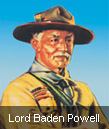 In 1899 during the defence of “Mafeking” in South Africa he was impressed by the work of Boy Cadet Corps, observing their sense of responsibility and potential. He organised an experimental camp at “Brown Sea Island”(UK) in 1907 and in January 1908 he wrote “Scouting for Boys”. Thus started the “Boy Scout Movement” which soon spread to different countries.
Scout movement took early start in India at Bangalore in the year 1909.The Scout movement in these formative years was controlled by British Army officeers who encouraged only British and Anglo Indian boys to join Scouting.


Pandit Madan Mohan Malaviya started “National Scout Association for Boys”, Dr. H.N. Kunjuru and Pandit Sriram Bajpal started “Seva Samiti Scout Association” in 1918. Due to persuasion of National , Leaders like Dr. Annie Besant, Dr. G.S.Arundale,Mr.Vivian Bose and others, the British sponsored organistaion “Boy Scout Association” started admitting Indian boys in 1920. During his visit to India in 1921 & 1938, Lord Baden Powell tried his best to get two Scout Associations merged but could not succeed as Seva Samiti Scout Association later named as “Hindustan Scout Association”, did not agree to the clause in Scout promise of loyality to the crown of England.

Finally, after the Independence of India due to the efforts of Prime Minister Jawaharlal Nehru and Education Minister Sri Abul Kalam Azad, the merge was agreed to and “Bharat Scouts and Guides” was formed on the 7th Nov. 1950. “The Girl Guide Association of India” formally joined the association on 15th Aug. 1951.
Scouting & Guiding
Hundred years of existence is a remarkable achievement for any organization, association or movement. It is overwhelming to know that the two major movements in the world, namely the scout movement and the guide movement have crossed hundred years. They have not only grown in numbers, they have also spread to every nook and corner of this world. The fact that several heads of states (including president, prime minister, kings and ministers) throughout the world, several scientists, several astronauts, several sports person, those from the industrial and technological sector and so on have been active members of scouting and guiding goes on to signify how much scouting and guiding is valuable.
There are more than 28 million scouts, young people and adults, male and female, in 216 countries and territories.
Some 300 million people have been scouts, including prominent people in every field.
Those who succeed best are those who learned scouting while they were still boys.
The first man to have stepped on the moon in the year 1969, Neil Armstrong was a former scoutmaster and an “Eagle scout”.
Of the 214 US astronauts’, 142 have taken part in scouting.
Of the 12 American astronauts who have walked in moon, 11 have been scouts!
It is a fact that a large number of those who have gone through the school of scouting have gone on to carve out distinguished careers in life others have become academicians, doctors, engineers, artists, religion leaders, top executives in the corporates sectors, head of NGOs etc.
Bill Clinton, former President of USA, Albert II, King of Belgium, Tony Blair, former PM of UK, Tunku Abdul Rahman, First Prime Minister of Malaysia, Ryutaro Hashimoto, former Prime minister of Japan, Richard Attenborough, Actor, Film Director/Producer, Bill Gates, founder of Microsoft corporation, Cliff Richard, Singer, Dudley Robert Herschbach and Peter agre are two know Eagle scouts who are Nobel Prize recipients, both for chemistry.
For almost 100 years, scouting programs have installed in youth the values fond in the scout promise and scout law. Today, these values are just as relevant in helping youth grow to their full potential as they were in 1910. Scouting helps youth develop academic skills, self-confidence, ethics, leadership skills and citizenship skills that influence their adult lives.
Scouting provides youth with programmes and activities such as camping, first aid, estimation, signalling, observation, cooking, mapping, pioneering., that allow them to
Scouting provides youth with programmes and activities such as camping, first aid, estimation, signalling, observation, cooking, mapping, pioneering., that allow them to
- Try new things
- Provide service to others
- Build self-confidence
- Reinforce ethical standards
While various activities and youth groups teach basic skills and promote teamwork, scouting goes beyond that and encourages youth to achieve a deeper appreciation for service to others in their community.
Scouting provides youth with a sense that they are important as individual. It is communicated to them that those in the scouting family care about what happens to them, regardless of whether a game is won or lost.
Finally, and perhaps most importantly, scouting promotes activities lead to personal responsibility and high self-esteem. As a result, when hard decisions have to be made, peer pressure can be resisted and the right choices can be made.Scouting provides youth with a sense that they are important as individual. It is communicated to them that those in the scouting family care about what happens to them, regardless of whether a game is won or lost.
Scouting - The World Book
Scouting is the world’s largest voluntary youth movement. It is non-political, and open to both boys and girls. Scouting aims to help young people develop physically, intellectually, socially, and spiritually through challenging recreation. There are more than 16 million scouts in 150 countries and territories. Since scouting began, some 250 million people –many of them later famous-have been scouts.
Scouting has been growing ever since it was founded in 1907. Membership doubled from 1970 to 1990. Much of this growth was in developing countries. During the 1980’s scouting reappeared in central and Eastern Europe, in countries where communist governments had represented it for many years, often replacing it with youth movement of their own.
Aims of Scouting: Scouting is not just “helping old ladies across the street.” It is an education for, life. It complements school and family. A scout makes a personnel commitment to a simple code of , living – a duty to god or country, a duty to others, and duty to self. Scouts learn by doing in programmes of progressive self-education, working in small groups to develop leadership, group skills, and individual responsibility. Many of these activities bring them in contact with nature. They learn how simplicity, creativity, and discovery come together to provide adventure and challenge.
The range of scouts’ voluntary activity around the world includes health and immunisation programs, building low-cost housing, planting trees, producing food, helping the old and the handicapped, and fighting drug abuse. Scouts are involved in programmes to protect the environment, to increase literacy, in teaching job skills, and in safeguarding the rights of children. Scouts help with relief work to help victims of floods, droughts, earthquakes, and other natural disasters.
Lack of clean water and bad sanitation are major problems in many parts of the world. Scouts are helping to clean up polluted waterways. They help to bring clean water supplies to remote villages. They show other people how to avoid polluting water.
Scouts also work with friends, neighbours, and community leaders in tackling locate problems. They work to promote locate, national, and international objectives, such as world peace, and international understanding and cooperation.
Highlights of the Movement
- Scouting is a largest uniformed voluntary organisation in the world.
- One of the world’s greatest and most progressive youth movements today.
- Scouting is a co-curricular.
- Scouting is a habit.
- Scouting is a way of life.
- When children involved in scouting they will get K.S.A. Knowledge, Skill, Attitude on the subjects and world.
- In Scouting we have different type of Varity activities based on the Age group.
- Only in Scouting we have membership for 3years old children.
- In scouting No Age Bar it is for young and old up to their interest.
- Scouting is a world Brother Hood movement.
- We have all level events, UNIT, DIST, ZONE, STATE, NATIONAL, and INTERNATIONAL.
- Scouting is based on 4 Pillars
(1)CHARACTER
(2)HEALTH AND STRENGH.
(3)HADICRAFT & SKILL
(4)SERVICE TO OTHERS. - Scouting means = Scouting & outdoor activities.
- Through the Scouting ‘soft skills’ can be developed well.
- Scouting [girls/boys] two wings.
The secret of scouting for this long year is patrol system. Patrol system developed Leadership, Responsibility in small age to smaller groups. - Boys Girls Age Group
Bunny’s Bunnies Age 3 to 6 years.
Cub Bulbuls Age 6 to 10 years.
Scout Guides Age 10 to 18 years.
Rover Rangers Age 18 + - Adult LEADERS
BUNNY - Bunny Aunties
CUBS - CUB MASTER
BULBULS - FLOCK LEADER
SCOUT - SCOUTMASTER
GUIDE - GUIDECAPTAIN
ROVER - ROVER SCOUT LEADER
RANGER - RANGER LEADER
The Vision of Scouting
As a global movement, making a real contribution to creating a better world we see scouting entering its second century as an influential, value-based educational movement focused on achieving its mission, involving young people working together to develop their full potential, supported by adult who are willing and able to carry out their educational role.
We see scouting world-wide as attracting and retaining more and more young people (especially adolescents) of both genders and coming from broader segments of society.
We see scouting as attractive to adults, women and men, in all cultures-a movement through which they can make a significant contribution to society by working with young people.
We see scouting as a dynamic, innovative movement with adequate resources, simple structures and democratic decision making processes where organisation, management and communication are effective at all levels.
Mission of Scouting
The mission of scouting is to contribute to the education of young people through a value system based on the scout promise and law, to help build a better world where people are self-fulfilled as individuals and play a constructive role in society. This is achieved by; involving them throughout their formative years in a non-formal educational process using a specific method that makes each individual the principal agent of his or her development as a self-reliant, supportive, responsible and committed person assisting them to establish a value system based upon spiritual, social and personal principal as expressed in the promise and law.
Scouting in Tamil Nadu
In India it has started in the year 1983 now nearly about 24,23,686 boy and girls are there in movement, our National head quarters in New Delhi.
In Tamilnadu we have our Head Quarters at wenlock park which in beach road opposite to Kannaki statue.
In Tamilnadu we have our Head Quarters at wenlock park which in beach road opposite to Kannaki statue.
Our honourable President of india our excellency Smt .Pratibha battil is the chief patron.
Our honourable Vice President of India Excellency Shri .M.Hamid Ansari is the vice patron of India.
Our honourable governor his Excellency Shri.Surjit Singh Barnala is the chief patron for the Tamil Nadu Bharat Scouts and Guides.
Our honourable minister of school education Thiru.Thangam Thennarasu is President of our movement.
Director of school Education Thiru.Perumal Swamy is our Statte Chief Commissioner of our movement.
Tuesday, 16 April 2013
Basic tips for health and hygiene at camp
The following are basic tips for health and hygiene at camp.
Anti-Bacterial
Anti-bacterial cleaners are types of disinfect
Anti-Bacterial
Anti-bacterial cleaners are types of disinfect
 ant and can kill germs. They often come in spray
form.
Anti-bacterial cleaners won't work if you don't use them properly, so always follow the
instructions.
Always clean surfaces first with detergent to remove any grease or dirt, then apply
disinfectant to kill any remaining germs.
Use separate cloths or sponges for separate tasks; where practicable use disposable cloths.
If using them more than once, wash in hot water and soap then place in a suitable
disinfectant, rinse thoroughly and allow to dry. Do not soak overnight as disinfectant solutions
weaken and may allow bacteria to grow.
Keep serving bowls covered to protect them from dust, insects and pets.
Bugs
'Bugs' and 'germs' are the common name for the harmful organisms - such as bacteria and
viruses - that cause food poisoning. Because we can only see them through a microscope they
are also called microbes or micro-organisms.
They can get into our food at any point in the food chain - from the time when an animal or
food is in the field to the moment food is put on to the table to eat. If they are allowed to
survive and multiply they can cause illness when that food is eaten.
Food poisoning bacteria multiply fast but to do so need moisture, food, warmth and time. They
multiply best between 5 and 63°C. One germ can multiply to more than 4 million in just 8 hours
in the right conditions. Food poisoning microbes can be dangerous and can kill - though this is
rare. They are very hard to detect since they do not usually affect the taste, appearance or
smell of food.
Cans
Before opening cans wipe over the tops to remove any dust - and don't forget to clean the can
opener.
Never put open cans in the fridge - transfer contents into a storage container or covered
bowl and remember to use within two days.
Don't use food from rusty or damaged cans.
Chopping Boards
Wash and dry knives and chopping boards thoroughly after every use and especially between
chopping raw meat, fish and poultry and chopping cooked and ready-to-eat foods. Ideally use
separate chopping boards for raw and cooked foods.
Cling Film
Cover dishes and other open containers with foil or film before storing them
in the fridge. Don't re-use foil or film to wrap other foods
Cool Bags
Use an insulated bag or cool box to keep chilled and frozen foods cool when shopping and buy
these foods last.
Use enough ice packs to keep cool bags really cool.
When having a barbecue or picnic keep meats, salads and other perishable foods cool in the
fridge or in a cool bag until just before you are ready to cook/eat them. Ideally use separate
cool bags for raw meats and cooked/ready-to-eat foods. Cool bags can only keep food cool for
a limited period so cook sooner rather than later.
WASHING HANDS
Don’t forget to wash hands:
a) before handling food – any food
b) before handling meat after veg
c) before handling veg after meat
d) before eating or sampling food during cooking
e) after eating or sampling food during cooking
f) before cooking
g) after cooking
Finally, EVERYONE to wash their hands before they sit down to eat.
Scouts responsibility during troop meeting
we expect each Scout to be active in Troop meetings and campouts, to advance regularly, to wear the full Scout uniform, to practice good manners and behavior, and to do his best by living the ideals of the Scouting as expressed in the Scout Oath and
Law.
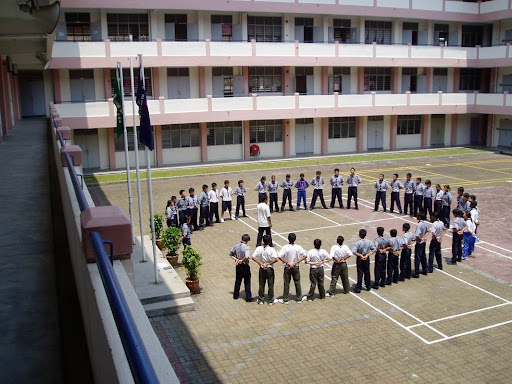 The key to successful Scouting is the camping program, and only active Scouts will reap the benefits of the Scouting experience.
We expect our Scouts to attend overnight campouts year round, and to make every effort to attend summer camp. If a Scout misses one of our weekly Troop meetings, he is expected to contact his Patrol Leader.
Inappropriate behavior is not tolerated in Scouting. The Troop leadership will counsel the Scout about his behavior which could result in suspension from the Troop if the behavior is not corrected.
Law.
 The key to successful Scouting is the camping program, and only active Scouts will reap the benefits of the Scouting experience.
We expect our Scouts to attend overnight campouts year round, and to make every effort to attend summer camp. If a Scout misses one of our weekly Troop meetings, he is expected to contact his Patrol Leader.
Inappropriate behavior is not tolerated in Scouting. The Troop leadership will counsel the Scout about his behavior which could result in suspension from the Troop if the behavior is not corrected.
World scout flag
The flag is actually royal purple with the white fleur-de-lis and rope is the flag for the World Organization of Scouting Movements (WOSM), headquartered in Switzerland. The flag represents all member organizations of the WOSM in a like manner as the United Nations flag represents all member nations of the UN.
The flag is taken from the fleur-de-lis, or lily of the flower, which as the previous poster wrote, is found as part of the Scout emblem of every other nations’ Scouting organizations. It is also found frequently on compasses and pointing devices and points in the true direction, as Scouts should also be moving positively toward.
The two stars on the flag allude to truth and knowledge, the two most important elements found in the creeds, promises and oaths of all member organizations. They also remind us of the stars in the sky and the outdoor element of Scouting.
 The rope encircles the fleur-de-lis and a reminder of the true brotherhood of all WOSM members. The rope is tied at the bottom in the reef knot (we Americans call it the square knot), which is the most useful of all rope knots if tied properly and reminds all of our obligations to be of service to one another as well as to be useful.
The flag is taken from the fleur-de-lis, or lily of the flower, which as the previous poster wrote, is found as part of the Scout emblem of every other nations’ Scouting organizations. It is also found frequently on compasses and pointing devices and points in the true direction, as Scouts should also be moving positively toward.
The two stars on the flag allude to truth and knowledge, the two most important elements found in the creeds, promises and oaths of all member organizations. They also remind us of the stars in the sky and the outdoor element of Scouting.
 The rope encircles the fleur-de-lis and a reminder of the true brotherhood of all WOSM members. The rope is tied at the bottom in the reef knot (we Americans call it the square knot), which is the most useful of all rope knots if tied properly and reminds all of our obligations to be of service to one another as well as to be useful.
Subscribe to:
Posts (Atom)